

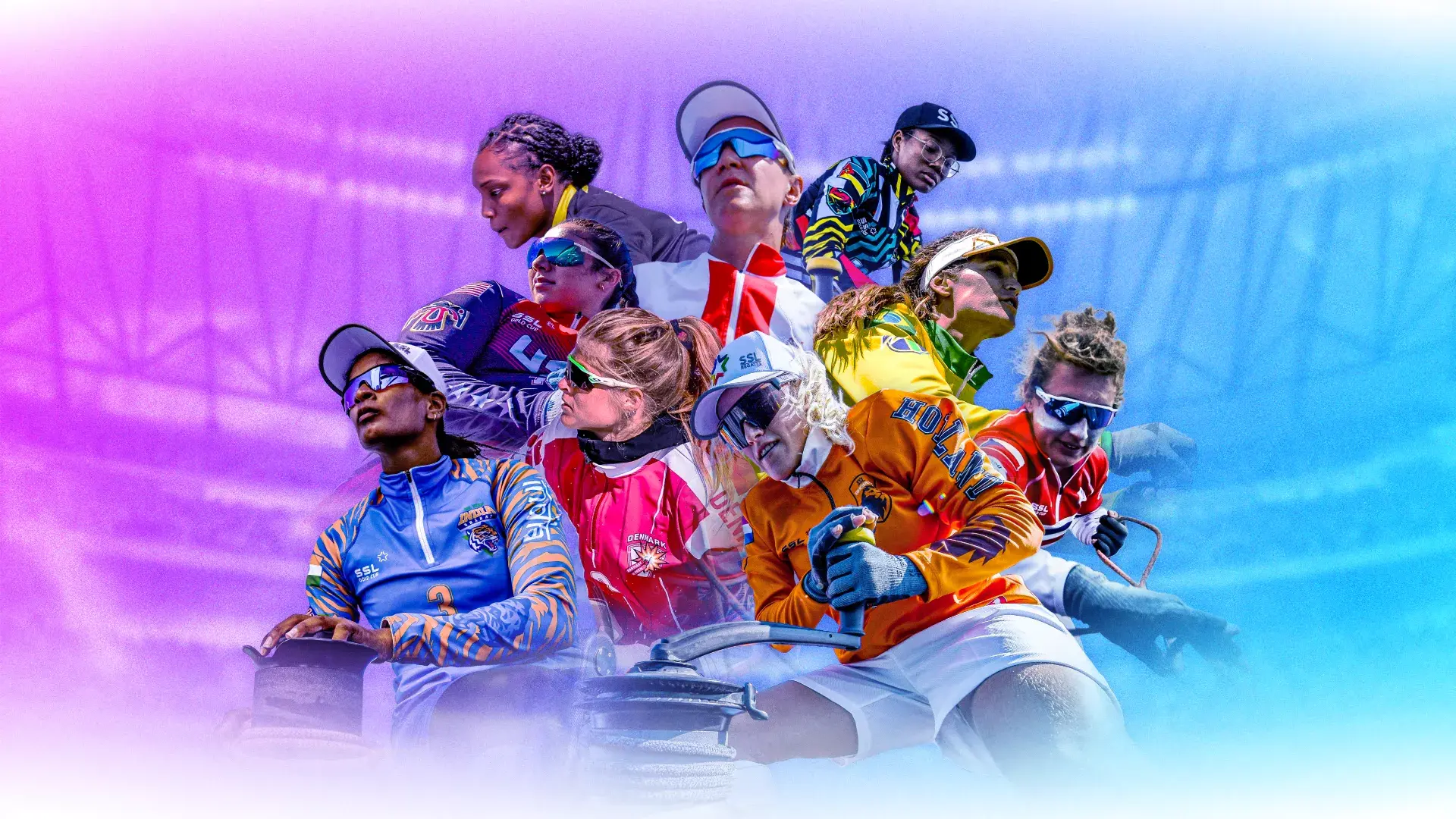
As the Star Sailors League (SSL) builds momentum towards its next World Cup in Sailing, a new generation of women sailors is driving change on a global scale. They are Olympic medalists and offshore adventurers, but also pioneers from developing sailing nations – all united by one mission: to prove that the ocean belongs to everyone.
In the SSL, where the world’s top athletes come together to crown the best sailing nation on Earth, these are the female athletes who are reshaping the game.
Between Olympic Glory and Global Stages
At the top of the fleet stand familiar names like Linda Fahrni and Maja Siegenthaler, double Olympians from Switzerland who bring their 470-class excellence and Olympic precision to big-boat racing. Maja, a passionate and dedicated sailor, is one of the best crews in Switzerland. For Fahrni, the transition marks a new chapter – an opportunity to evolve beyond the Olympic circuit and channel her experience into team-based, high-performance racing at an international level.
Their story echoes that of Australia’s Annie Wilmot and Laura Harding, who after having won Youth World Championships, excelled into Olympic classes and the inaugural Women’s America’s Cup in 2024. Through the SSL, they continue to bridge the gap between Olympic and keelboat sailing – proving that high-level performance can go hand in hand with greater visibility for women in the sport and inspiring the next generation of female sailors to see it as a true career path.
These might be the headline names, but the SSL’s real transformation is happening deeper in the fleet, where sailors from emerging sailing nations are breaking barriers that once seemed immovable.
Trailblazers From Emerging Sailing Nations
For Moroccan sailor Zineb Hariss, the journey to the SSL has been as transformative as the races themselves. A three-time national champion in the ILCA 6, she earned her spot on the Moroccan national team after consecutive wins at home and strong performances across Africa. “That’s how my journey with the team began,” she recalls. “Competing and training with some of the best sailors in the country has pushed me to improve a lot, both technically and mentally.”
Hariss is now main trimmer on SSL Team Morocco, a key position responsible for the boat’s speed and balance. “It’s a role that requires precision and constant teamwork,” she says. “Every small adjustment matters.”
Meanwhile, in the Middle East, Oman’s Ibtisam Al Salmi – trimmer for SSL Team Oman, has become a household name for her pioneering spirit. One of the first professional female sailors in the region, she began as a volunteer with Oman Sail before becoming an instructor, racer, and international competitor.
“During my studies back in 2010, I volunteered with Oman Sail when they were hosting an Extreme Sailing event. I fell in love with the sport immediately. After I finished my studies, I joined the Oman Sail program to become an instructor, and after qualifying, I joined the race team.”
Her résumé reads like a map of modern sailing; from Laser, Diam24, and Farr30 to being the first Arab sailor to race from France to Germany, and even competing in a double-handed Class 40 race around Italy.
“I raced with Team Oman on the MOD70 for three days. The boat was incredibly fast, and I’ll probably never experience anything like it again. I learned from the best and was so lucky. Racing around Italy in the Class 40 was a completely different experience – fewer people and bigger responsibilities, but we never gave up and completed the whole race.”
For both Hariss and Al Salmi, the SSL is as much about results as it is about development and access. Al Salmi recalls her team’s 10-day training camp in Grandson, Switzerland, where they sparred with three other national teams – an invaluable experience in building confidence and skill. Hariss, meanwhile, is preparing for upcoming events. “We’re planning new training camps soon,” says Hariss, who splits her time between France and Morocco to stay race-ready. “It’s a chance to train with mixed teams, learn from legends, and bring that knowledge back home.”
Pushing for Parity: The League’s Commitment to Equality
The SSL’s vision to crown the best sailing nation in the world is now intertwined with a clear social goal: to make sailing more inclusive than ever before. The sport can only grow if everyone has a fair chance to take part. That’s why 25% of every national team must now include women, that is a minimum of two people onboard. Our goal is full gender equity by 2032.
This extends beyond the water. Working closely with international sailing federations and event organizers, the league is actively promoting women into race-management, umpiring, and jury positions. The SSL Training Camp in Grandson, Switzerland, earlier this year was a glimpse of that future: men and women from around the globe training and working side-by-side, exchanging skills, and raising each other’s game under the same sail.
Leading that vision on the water is Emma Plasschaert, captain and tactician of SSL Team Belgium. A two-time ILCA 6 World Champion and double Olympian, she brings more than a decade of top-level racing experience and sharp tactical insight to her national team. Having started sailing at just seven years old, she has risen through every stage of the youth pathway, from Optimist and Europe dinghies to the ILCA 6 class, where she honed her precision and mental strength. Now, as co-captain, she focuses on fostering performance, team spirit, and collaboration among sailors from different disciplines, embodying the inclusive and high-performance mindset that the SSL aims to spread across the sport.
The same mindset is reflected across the Atlantic, where South American women are emerging as powerful forces in the league. In SSL Team Ecuador, Irene “Bebe” Suárez brings both youth and an impressive record to her team, having already secured multiple national and South American titles in the Lightning class and earned recognition as Best Female Sailing Athlete by the Ecuadorian Olympic Committee for four consecutive years. In SSL Team Colombia, Ana Sofia Bermudez adds strategic strength and versatility as team tactician, drawing on her achievements in the Sunfish, 420, and Lightning classes, along with medals from the Central American and Caribbean Games and top results at world championships. Together, they represent the growing reach of the SSL and its impact on empowering women from all corners of the globe to compete on sailing’s highest stage.
Rising Tides for Global Sailing
As the road to the SSL Gold Cup 2026 unfolds, women like Zineb Hariss and Ibtisam Al Salmi are charting a new course – one that fuses national pride, personal courage, and a shared vision for the future of sailing.
For Zineb Hariss, it’s about representing a nation with deep maritime roots and carrying forward the Royal Moroccan Sailing Federation’s long-standing mission to advance women’s participation. Morocco’s history in the sport stretches back nearly a century, and today, with major events such as the upcoming Optimist World Championship 2026 in Tangier, the country is emerging as a true global sailing hub. Hariss embodies this momentum – part of a new generation proving that Moroccan sailors, and especially women, belong among the world’s best.
For Ibtisam Al Salmi, it’s about showing how far a nation can come when opportunity meets determination. Sailing in Oman has evolved rapidly, with Oman Sail earning international recognition, from the World Sailing Excellence Award to the Gold Award for Best Sports Event Organizer in the Middle East. Through the SSL, Omani sailors now have a global stage to showcase their skills and inspire the next generation. For Al Salmi, equality in sailing is no longer an aspiration but a lived reality where men and women train, race, and succeed together.
Regardless of nationality, background, gender or culture, every athlete competing under the SSL banner carries the same message: being a sailor and an athlete is about far more than physical strength. It’s about mental resilience, social awareness, and the ability to inspire others through confidence, perseverance, and determination. Across sixty-five nations, these women are competitors and role models demonstrating to the world what women are capable of when given equal opportunity.
Together, Hariss and Al Salmi represent the essence of what the Star Sailors League stands for: progress built on access, unity, and shared ambition. Alongside dozens of other trailblazers from every corner of the globe, they are proving that the SSL is far more than a championship. It’s a movement redefining who gets to compete, who gets to lead, and what the future of sailing looks like. And as more women join the race to crown the best sailing nation on Earth, the answer to that opening question feels closer than ever:
Yes. Sailing really could become the biggest sport in the world.
Written by: Madeleine Lithvall